
'What India needs to do is to re-build those cultural links in a way it didn't.' 'Clearly, India needs to wake up and spend more time on ASEAN.'

'The ISI has given a stunning display of its capacity to do with impunity what it likes within Kabul. Incensed over the triumphalism of the hardliners in Kabul, the ISI has hit out; it is a typical ISI reflex action that Indians are familiar with,' says Ambassador M K Bhadrakumar.

The photo published by the People's Liberation Army Air Force showing a long-range strategic bomber flying within visible range of Yushan, Taiwan's highest mountain, has caused great concern in Taiwan amid debate about whether the mainland will reunify the island by force, state-run Global Times reported.

India expects to remain unscathed this time, mainly because it is in a sweet spot as the world's third largest oil consumer, after the US and China, says Subhomoy Bhattacharjee.
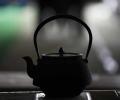
An increasing number of b-school graduates are exploring tea-based services and products for businesses and some of them have tasted success too.

Prime Minister Narendra Modi on Friday said his government has carried out major reforms -- including labour reforms and reforms in insurance and defence sectors -- 'in less than 100 days' and stopped reversals Indian economy had been facing.

India and the United States settled a dispute on Thursday that had paralysed the World Trade Organization and risked derailing a $1 trillion package of reforms.
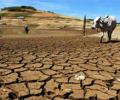
Delhi concedes one climate issue on Obama's agenda

Claude Arpi, who spent 10 days in the Land of the Dragon, tells us how Bhutan is different from the rest of the world.
Claude Arpi, who spent 10 days in the Land of the Dragon, tells us how Bhutan is different from the rest of the world.

Dr Manmohan Singh would be faced with very few choices in Beijing given the Chinese conceived notions of the world today and India's low place in their calculus, says Srikanth Kondapalli.

Since multilateral trade creates a stable, peaceful world, normalisation of bilateral trade between India and Pakistan will start a series of peace building measures, especially along the bordering areas of both states which is the worst affected from the on-going conflict, say Riya Sinha and Shehzad Poonawalla.
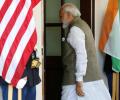
We see none of the euphoric build-up customary to India's encounter with US presidents in recent times. This gives Modi wriggle room to work on the much-needed reset of India-US ties.

'Modi and Xi can solve the India-China border problem in a single sitting by keeping the big picture before them, by sweeping away the cobwebs of the past, and by mustering a statesman-like spirit and a long range vision,' says B S Raghavan, the distinguished civil servant.

The question really is whether the US can be persuaded to embark on a path of calibrated and stronger sanctions on Pakistan.

For a rising country like China with its sights set on global and regional power, any coming together of the US and India is the worst case scenario. Hence, China is concerned with the emerging equations between New Delhi and Washington, says Srikanth Kondapalli.

'There were assurances that Jaish-e-Mohammad was being reined in as was the Lashkar-e-Tayiba, but Pakistan's security forces could not risk opening too many dangerous new fronts,' notes former foreign secretary Ambassador Shyam Saran, who has just returned from a visit to Lahore.

Saurabh Mukherjea, CEO, Ambit Capital, says he is advising clients to either take a genuinely long-term view on stocks or diversify the portfolio with stocks, bonds and gold for those with a short-term view.

52 world leaders, including Narendra Modi, will attend this week's Nuclear Security Summit in Washington, DC. Obama will meet separately only with the Chinese president.

The visit of Park Geun-Hye to India, though a symbolic one, will certainly give a further impetus to the strategic partnership between the two countries says Rup Narayan Das.

'India is no longer the India of the '70s and the '80s.' 'It's a large country with the fastest growing economy.' 'In working with India, you just can't go and humiliate the nation publicly.' USIBC President Mukesh Aghi tells Aziz Haniffa/Rediff.com about how he advises American companies to do business with India, what he thinks of Modi's government and the way forward for the India-US relationship.

The government must justify why we need to buy foreign reactors when we have developed up to 700 MWe unit-size pressurised heavy water reactors, a design which can be easily extended to 900 to 1000 MWe unit size. Why can't the 'Make in India' philosophy apply to indigenous nuclear reactors, more than 18 of which have been designed, built, and being operated by Indian engineers, asks Dr A Gopalakrishnan.

'Whether it's investments in Kashmir, building naval facilities, or selling top-of-the-range military equipment, Pakistan could well benefit more under Xi's watch.' 'Do Chinese concerns about the 'Islamisation' of Pakistan give it pause about how quickly to move forward with security and economic projects? At the moment the indication is quite the opposite: China is doubling down on its support to Pakistan, partly because of its fears about where the country is headed.'

Despite the rally, on the basis of valuations, Indian markets aren't too expensive, says Christopher Wood, managing director and equity strategist at CLSA.
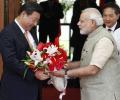
Arvind Subramanian talks about US and China's power play and where India figures in these dynamics.
